B2B product architecture, rollout, and customer-driven iteration
This project started from a business integration problem, not from a feature brief. The company was partnering with some property businesses and acquiring others, but the existing systems were old, fragmented, and hard to scale. I worked as the early product manager and UX lead to turn those scattered business signals into one connected B2B system: a property SaaS backend linked with employee and owner apps, AI monitoring workflows, and device software. The first phase was designed to validate the model through pilot use in roughly three property companies before scaling nationally — the platform eventually launched across 6,000+ property enterprises. My work focused on requirement discovery, architecture definition, rollout support, and feedback-driven iteration across real property customers.
Role
Product Manager — platform architecture and device management scope
My scope
Platform architecture, basic-data configuration, device management (access control and central control), PRD writing, wireframes, and rollout support. A second PM owned the financial payment and work order systems.
Platforms
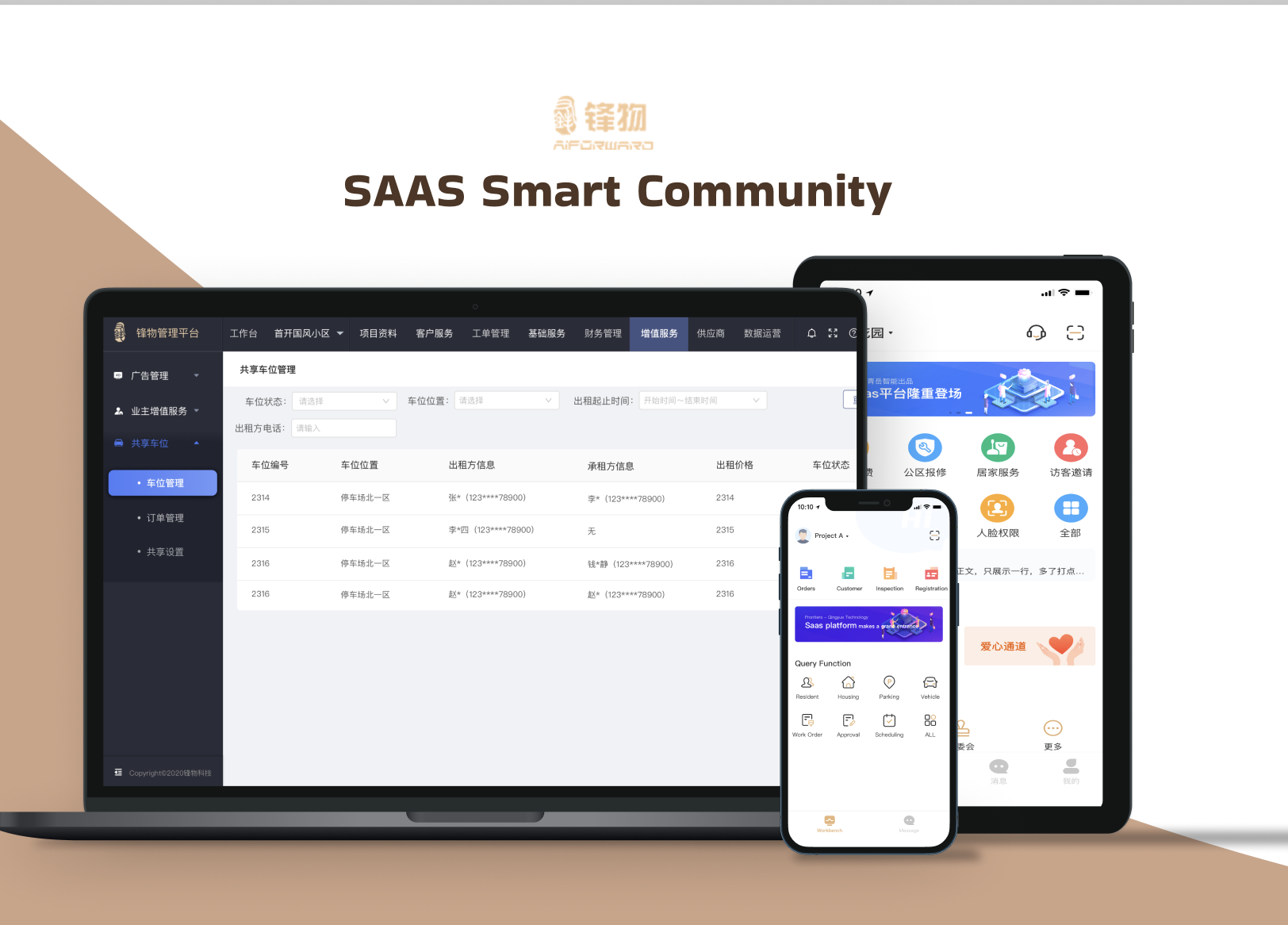
Property SaaS backend, staff app, owner app, AI Cloud Eye console, access-control and central-control device software
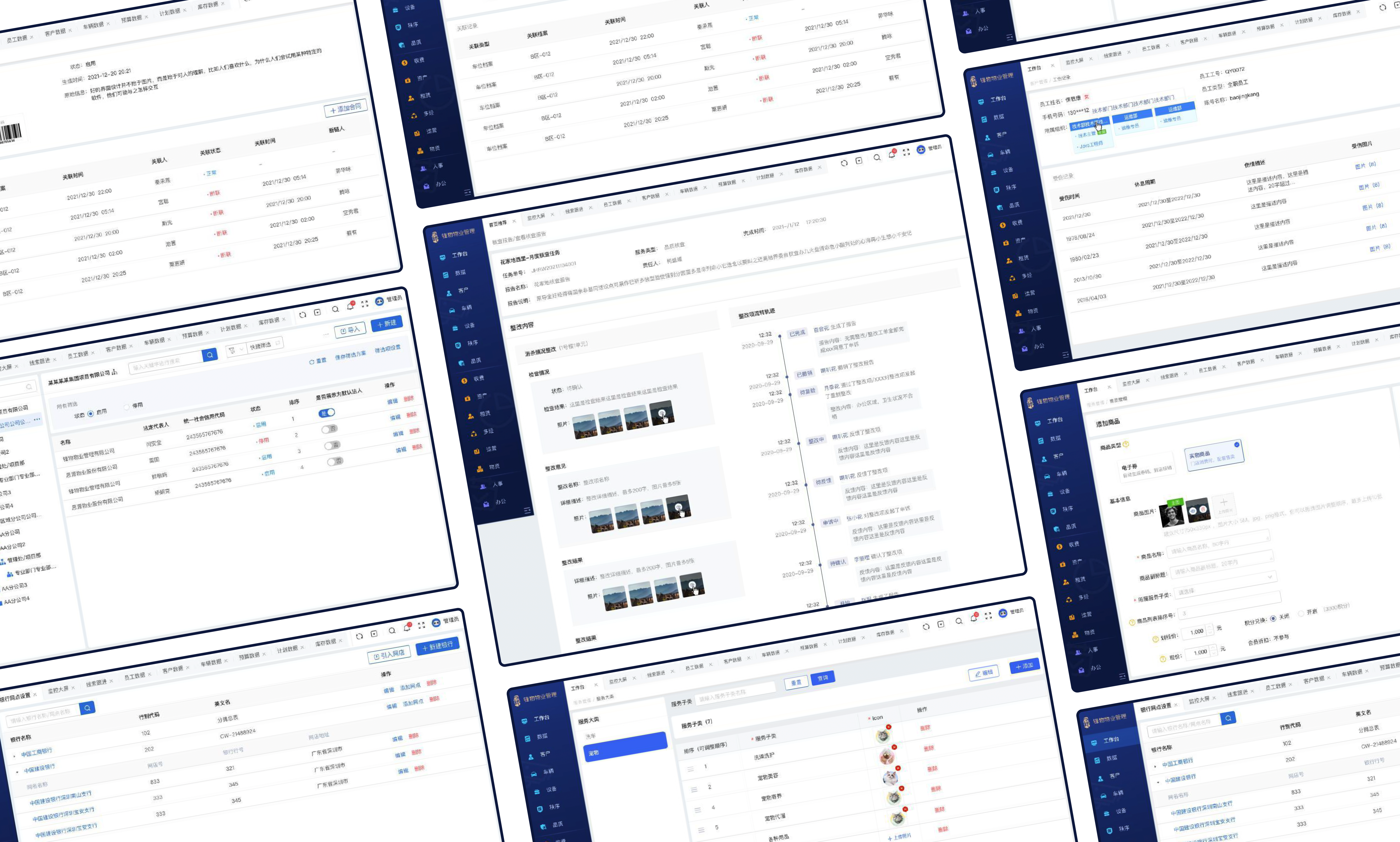
SaaS backend Property data configuration, workbench, customer, vehicle, and device management
Employee and owner apps Staff execution layer and resident-facing service layer
AI Cloud Eye console Monitoring, alert handling, and risk-response workflows
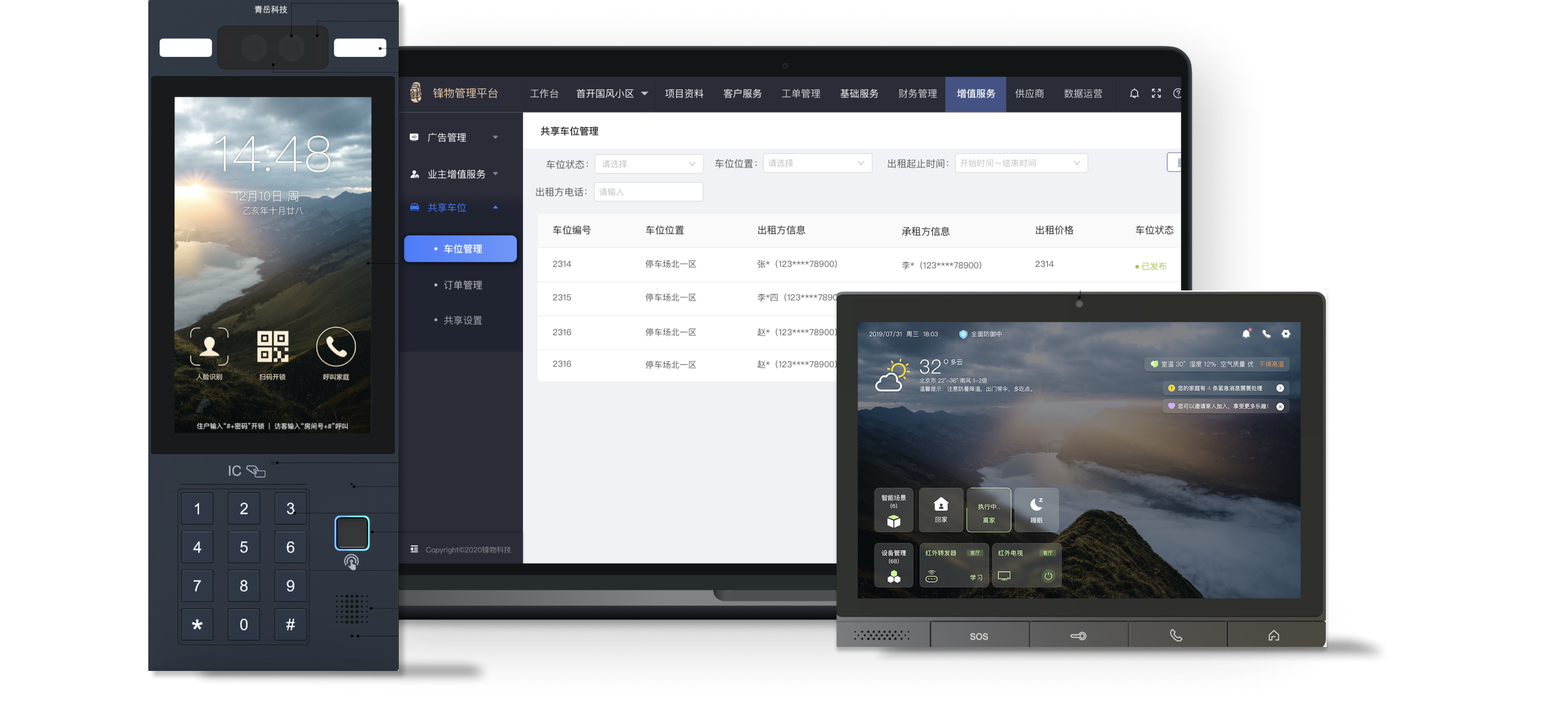
Device software Access-control and central-control Android integration
Status Piloted in ~3 property companies, then scaled to 6,000+ property enterprises
My responsibilities
Business communication, field research, and stakeholder interviews across roles
Product architecture: SaaS structure, module definition, and cross-surface logic
PRD writing, Sketch wireframes, and cross-team alignment across design, R&D, and QA
Rollout support: pilot deployment, customer training, field feedback, and iteration cycles
Problem framing and product strategy
The company was in an active expansion phase — simultaneously partnering with external property businesses and acquiring others. Each incoming business brought its own legacy workflows, fragmented software, and disconnected operational data. There was no shared platform, no unified view of operations, and no consistent way to manage work orders, property data, or resident services across communities.
What made the situation more complex was that the company already had meaningful technical assets in place. The hardware division had developed its own access-control and central-control devices, already deployed across multiple communities. There was also an established AI-based smart alarm capability — an intelligent alert system that could detect risk events such as fire-lane blockages, restricted-area intrusions, and abnormal gatherings from live camera feeds. But these components were entirely disconnected. The hardware ran its own device software. The AI alert system operated independently. Property teams were managing physical devices, AI-generated alerts, and day-to-day workflows through separate channels with no integration between them.
The product challenge was not to build a standalone SaaS tool in isolation. It was to unify an existing hardware estate, an existing AI capability, and the operational needs of multiple newly merged property businesses into one coherent, scalable platform — while keeping the first release focused enough to pilot across roughly three property companies and validate the architecture before national rollout.
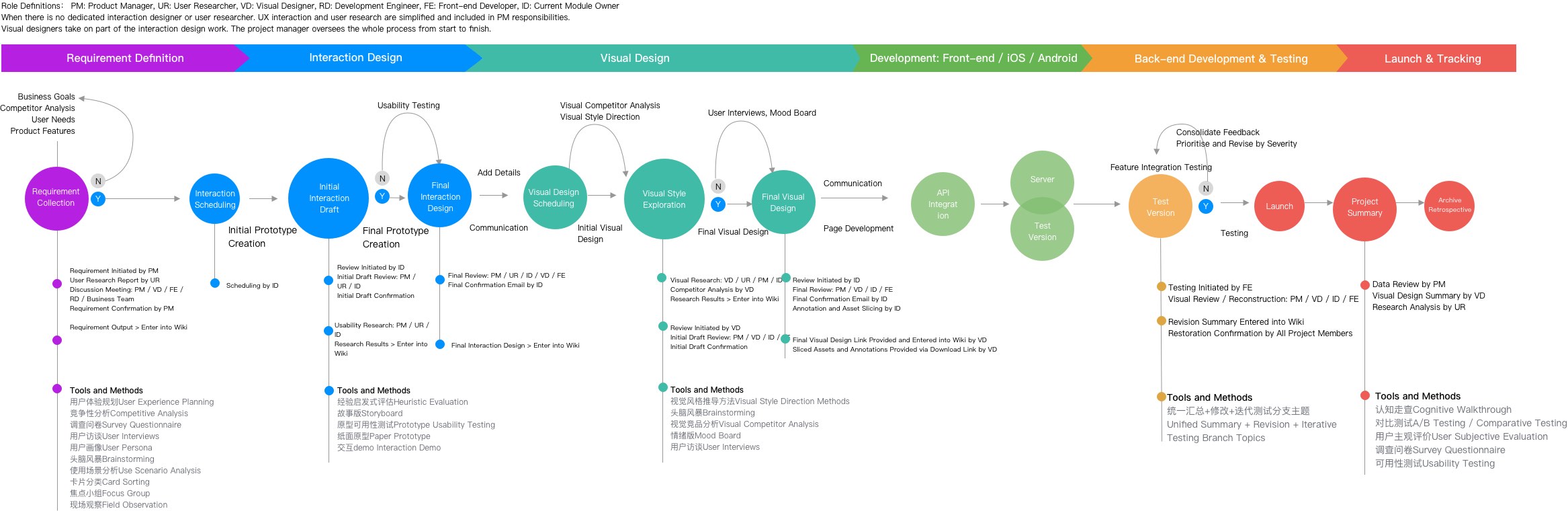
The six-phase delivery process I structured for this project — from requirement definition through interaction design, visual design, development, testing, and launch — with defined role responsibilities, handoff criteria, and tools at each stage.
SaaS architecture and workflow design
Once the requirements were clearer, I translated them into the initial SaaS architecture and the cross-role service loop. This made the solution easier to explain internally and easier to prioritise as a system rather than as disconnected feature lists.
The architecture covered property basic-data configuration, the workbench, customer management, vehicle management, device management, resident-side connections, staff-side connections, access-control coordination, central-control support, and risk-response coordination. I turned these into product architecture, requirement structures, PRD documents, and Sketch wireframes so design, engineering, and QA could move with shared clarity around the SaaS platform.
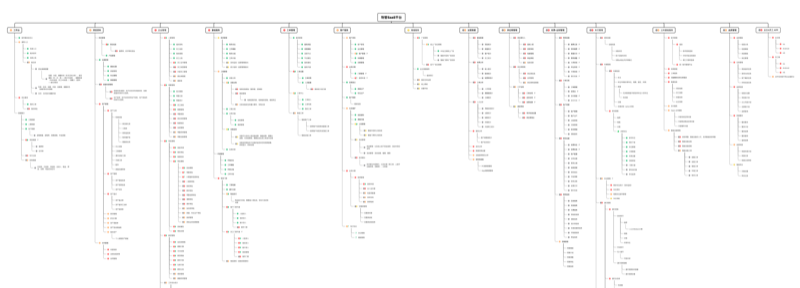
The product feature architecture I defined for the SaaS platform — covering all modules across property data configuration, workbench, customer management, vehicle management, device management, and connected system surfaces. Used to align the team on scope and structure before PRD writing.
1. Architecture
Defined the first product structure
The SaaS backend was positioned as the centre of the system, with connected employee, resident, AI, and device-side products around it.
2. Workflow
Mapped cross-role service loops
I defined how managers, staff, residents, and connected devices linked back to the SaaS platform through the right product modules and information structure.
3. Requirements
Structured the PRD logic
I converted research findings into requirement groups, release priorities, and functional boundaries for the first phase.
4. Wireframes
Built core flows in Sketch
I produced wireframes for management screens, work-order flows, and connected interactions so the team could align quickly.
5. Delivery
Aligned design, engineering, and QA
I worked across teams to keep implementation aligned with the architecture, the PRD, and the pilot requirements.
Core SaaS modules
Property basic-data configuration and workbench
Customer management and vehicle management
Device management and connected system setup
Connected product surfaces
Employee app for execution and updates
Owner app for services and feedback
AI and device software for monitoring and physical operations
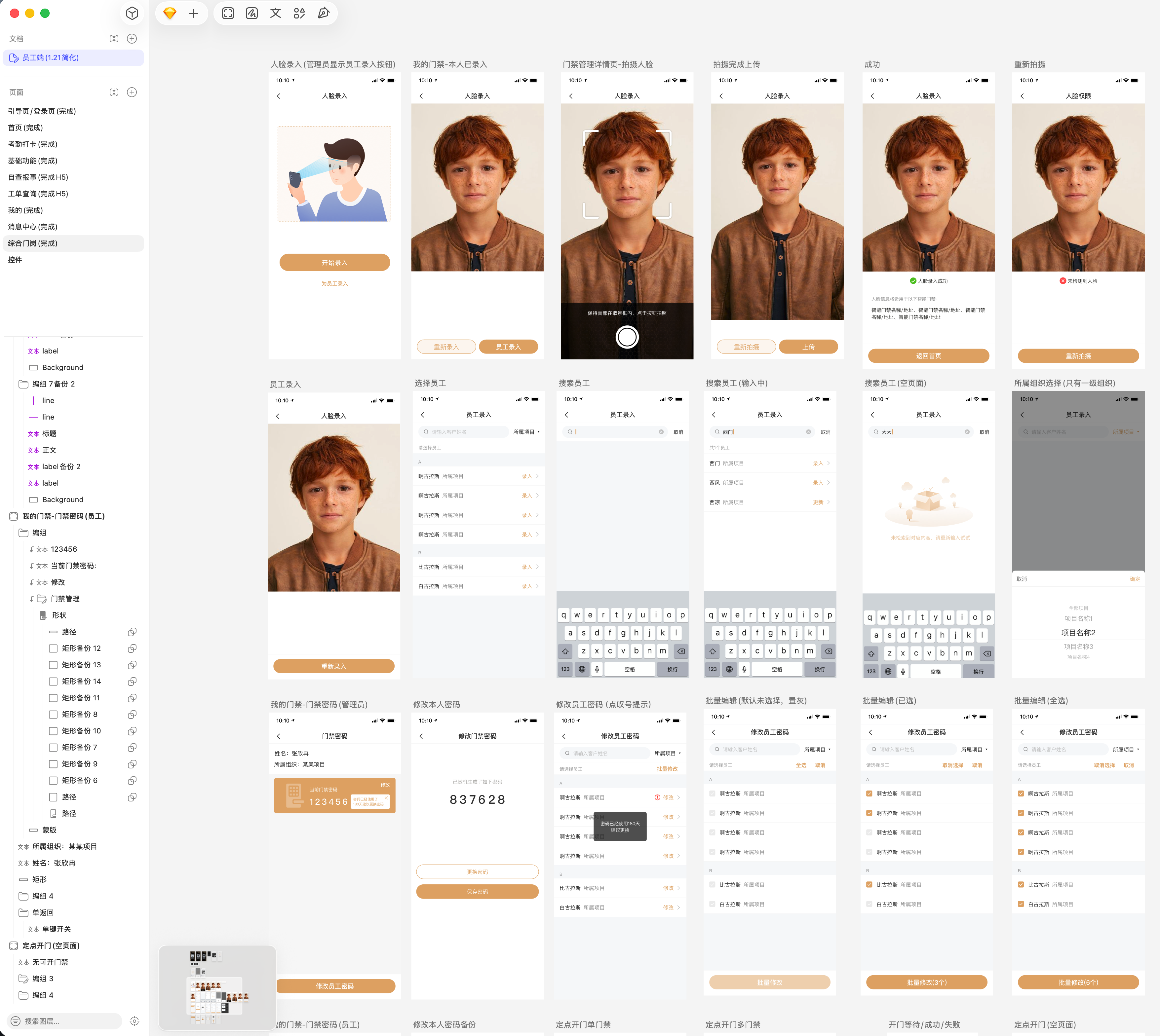
Access control app wireframes (Sketch)
Wireframes for the access control and face-recognition app, covering identity verification flows, gate operation screens, and device management views.
SaaS back-end wireframes (Sketch)
Sketch wireframes and interaction specifications for the work order management modules, covering creation, assignment, tracking, and review flows.
Risk monitoring and alert workflows
AI Cloud Eye was an important supporting capability inside the full solution, and the product value went beyond simple alarm display. According to the public AIForward Yunyan product framing, the platform combined AI scene applications, remote quality management, and a data cockpit to help property teams manage both community-governance service scenarios and risk-recognition scenarios.
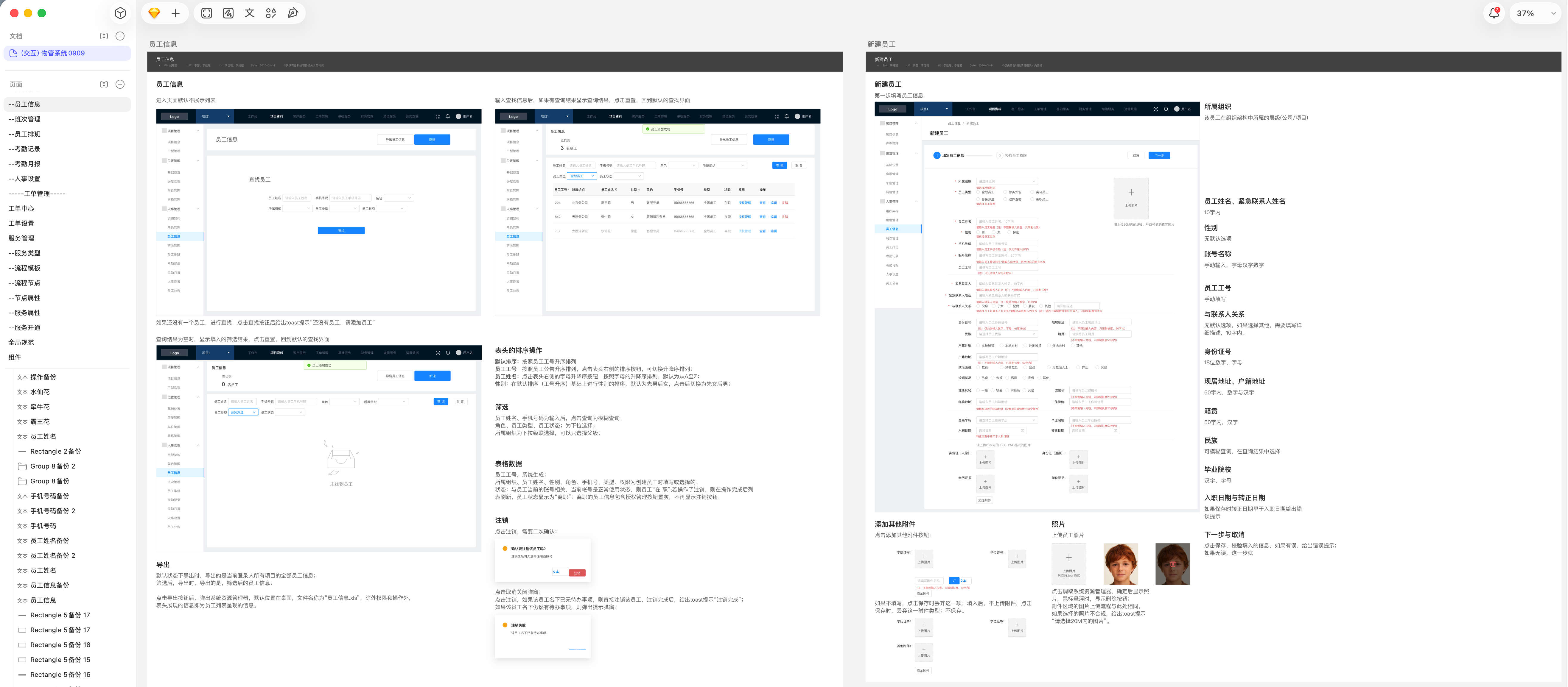
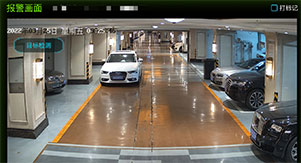
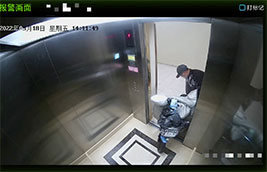
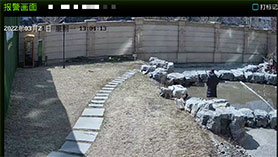
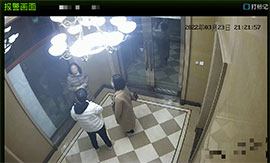
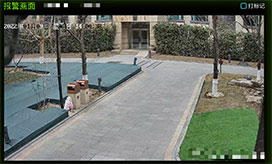
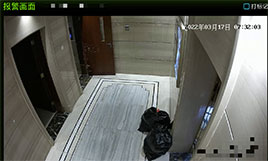
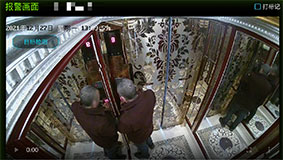
That meant the product design had to balance speed and reliability. I treated alert lists, map views, tracing logic, evidence capture, and follow-up handling as part of one operational workflow, then connected them back to the people and systems responsible for action. The system needed to support high-frequency property scenarios such as fire-lane occupancy, e-bike-in-lift alerts, restricted-area alerts, abnormal gathering, illegal waste disposal, shared-area clutter, abnormal loitering, staff on-duty checks, and pet-leash compliance.
Defined AI-assisted monitoring as one operational capability inside the wider solution, not just a visual dashboard.
Connected risk-recognition scenes and community-governance service scenes to handling status, supporting evidence, and follow-up tasks.
Supported remote quality management and management-side visibility, not only frontline alarm handling.
Designed for fallback and human confirmation when automation was uncertain.
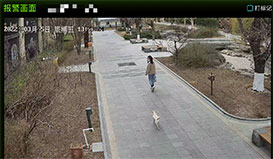
Fire-Lane Occupancy Detect blocked fire access and trigger faster follow-up.E-bike in Lift Alert Identify unsafe elevator use and support intervention.Restricted-Area Alert Monitor sensitive zones and flag unusual activity.Abnormal Gathering Surface crowd-risk events for earlier property response.Illegal Waste Disposal Support cleaner shared spaces and faster remediation.Shared-Area Clutter Flag objects left in public areas before they become hazards.Abnormal Loitering Alert Detect suspicious dwell time in shared spaces.Staff On-Duty Check Support remote quality inspection and attendance review.Pet-Leash Compliance Improve order in shared spaces through active detection.
Platform logic
AI scene applications supported 24/7 risk recognition across high-frequency property scenarios.
Remote quality management helped property teams supervise execution and service standards.
The data cockpit gave management-side visibility from project level up to broader organisational review.
Why this mattered
The same platform could support both safety-related alerts and day-to-day community-governance service scenes.
Property managers were not just looking at alarms; they were using the system to improve service quality and response discipline.
This made AI Cloud Eye a management tool inside the SaaS system rather than an isolated surveillance product.
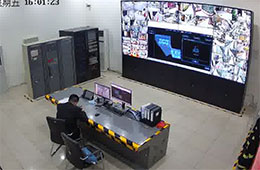
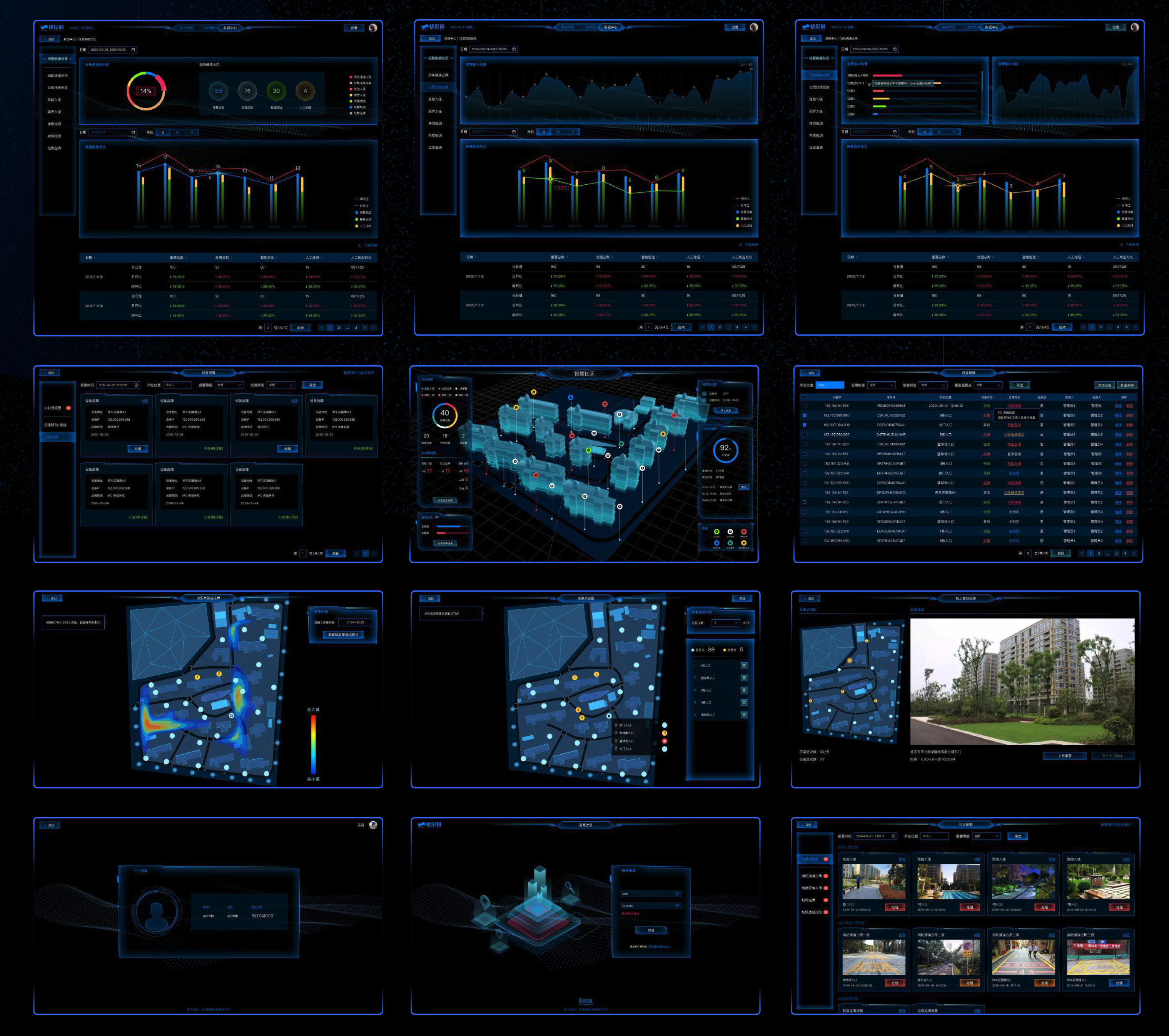
The AI Cloud Eye alert console — the final UI delivering AI-assisted monitoring, map-based community overview, real-time alert lists, camera tracing, and exception-response workflows for property management teams.
Iteration based on user feedback
I also drove the fast-iteration loop after the initial release cycle. Instead of treating the PRD handoff as the end of product work, I kept collecting stakeholder feedback, user comments, and operational questions to identify where the architecture or flows still felt heavy or unclear.
Typical iteration themes included improving task-entry speed, making data views more readable, reducing the number of steps needed for review, clarifying mobile notifications, and making dashboards more useful for different business modules. This is where product management and UX judgment needed to work together closely.
The rollout stage was also where the B2B loop became most visible. I was not only refining screens. I was helping the product become more usable in the real context through training, field feedback, and iterative clarification of what actually worked for customer teams.
Collected continuous feedback from managers, staff, and internal stakeholders after the first requirement round.
Used questionnaire items and field comments to validate what was a true recurring pain point versus a one-off request.
Prioritised changes that improved execution efficiency, reporting legibility, and module usefulness across different roles.
Turned feedback into short iteration cycles instead of waiting for large redesign phases.
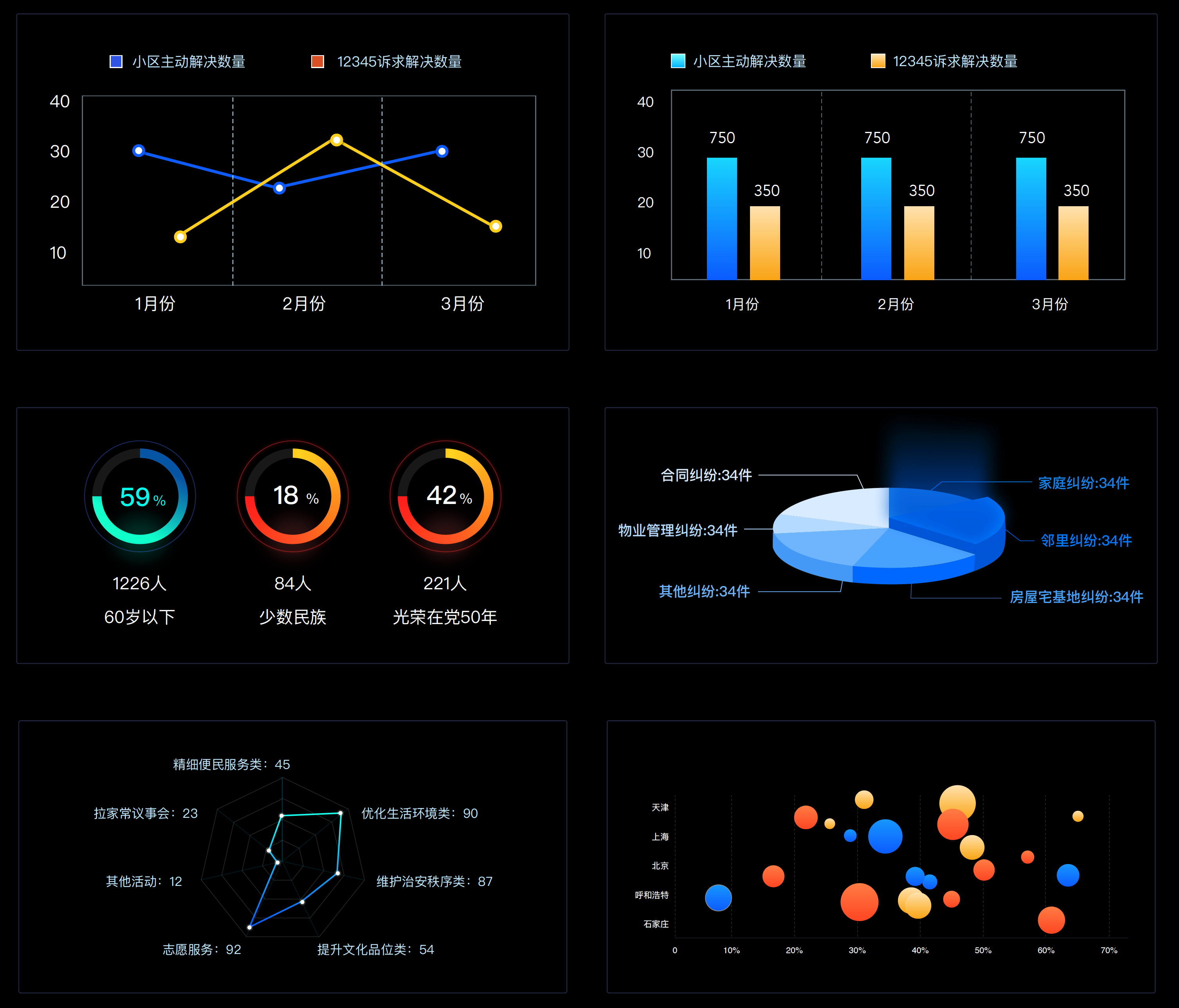
The data cockpit gave management teams visibility into complaint trends, demographic breakdowns, and service category performance.
Outcome
The project delivered measurable commercial and operational value in a real smart-community setting. It improved day-to-day efficiency for property operations, supported labour-cost reduction, and created a stronger basis for SaaS rollout across partner and acquired property companies.
During my tenure
Operational efficiency
60%+ improvement in property operation efficiency.
20% reduction in labour cost.
Security operations headcount reduced by 50%.
Deployment and adoption
Daily work order completion rate: 90%+.
Deployed across 40+ communities serving 1M+ residents.
Platform-level scale (post-launch)
Cost reduction
Security patrol roles reduced by 10% overall.
Cleaning roles reduced by 5% overall.
Remote quality-inspection cost reduced by 80%.
Efficiency and reach
Remote quality-inspection frequency increased 4×.
Average 1.3 level-one hidden risk points identified per project.
Owner satisfaction increased by 5 percentage points.
Platform expanded to 6,000+ property enterprises.
Property company SaaS backend
Management-side property data configuration, workbench access, customer records, vehicle records, and device-management capabilities.
Access-control and central-control hardware plus Android software
The smart-community product suite also included supporting access-control and central-control hardware, together with the Android software that connected those devices back into the broader system.
Platform-level figures are sourced from public smart-community solution materials published by AIForward.
Failures and learning
One of the biggest lessons in this project was that B2B complexity cannot be solved by feature accumulation. Early on, it was easy for requests from different roles, pilot customers, and internal teams to pull the product in too many directions at once.
I learned that the more complex the environment is, the more important it is to protect the first product structure. That meant making harder prioritisation calls, separating structural needs from local requests, and treating rollout feedback as evidence to refine the architecture instead of reopening everything every time.
This project strengthened my belief that product clarity matters more than feature volume, especially when operations, apps, devices, and AI workflows all have to work together.
Product management
How projects like this changed my assumptions about PM work, ambiguity, and what good product judgment actually requires in complex B2B environments.